CH. 011947
Born in Rosà
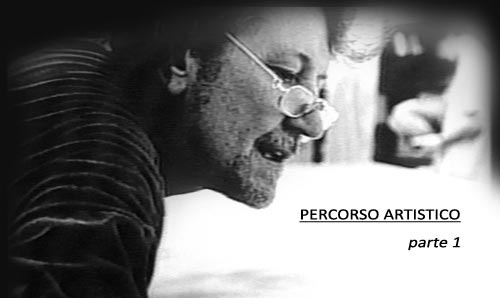
Renato Meneghetti is born in Rosà di Vicenza on 19 March 1947.
// EST. 1947 · ROSÀ
From 1947 to today: training, work, exhibitions and cycles — in chronological order, with references and dates.
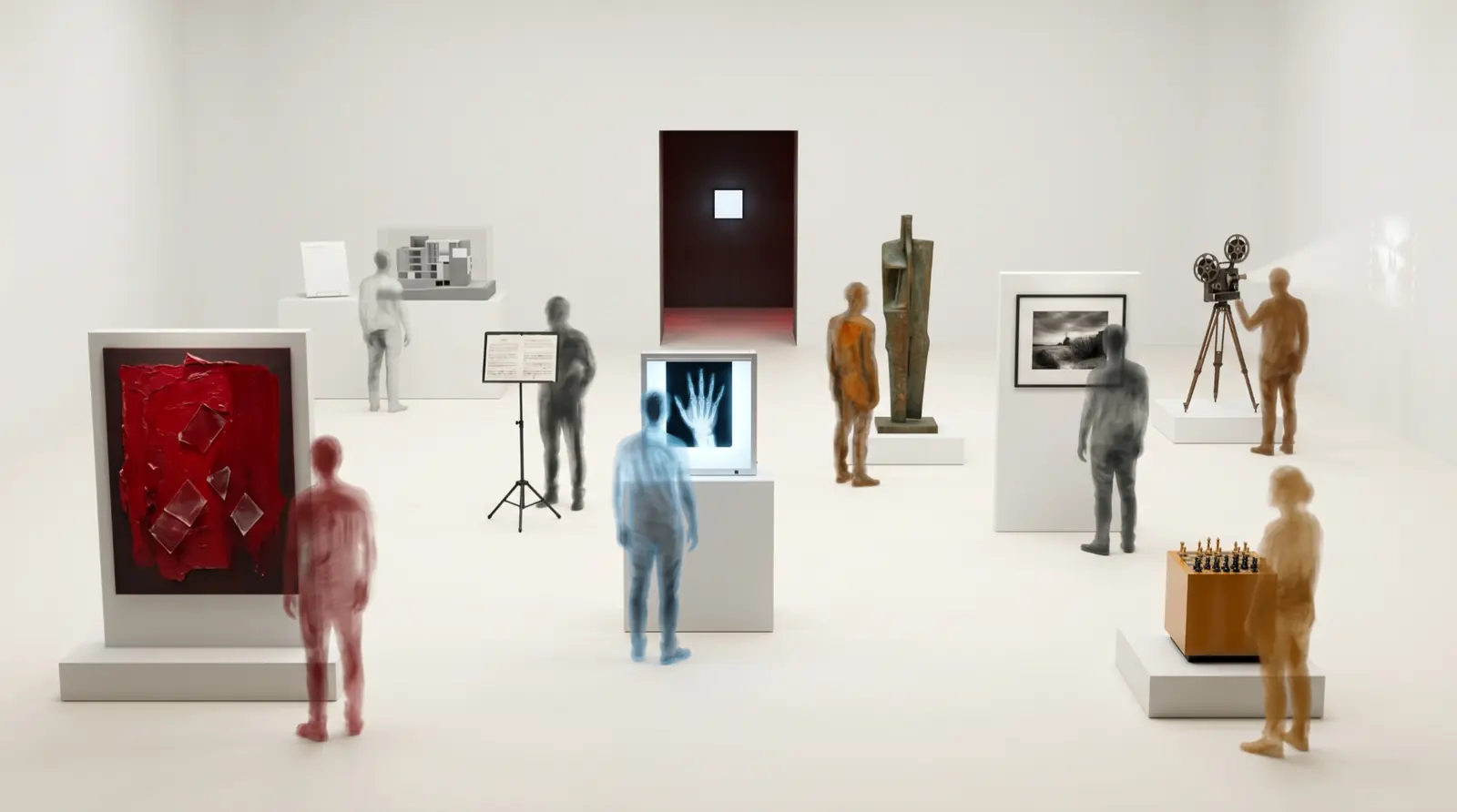
He has worked across several disciplines — painting, sculpture, design, architecture, photography, cinema, music, theatre — without joining a movement. The notes below reconstruct the documented stages of his career.
ACT
I
Training, Rosà, first works
1947 → 1972
Renato Meneghetti is born in Rosà di Vicenza on 19 March 1947.
1953–55
CH. 02
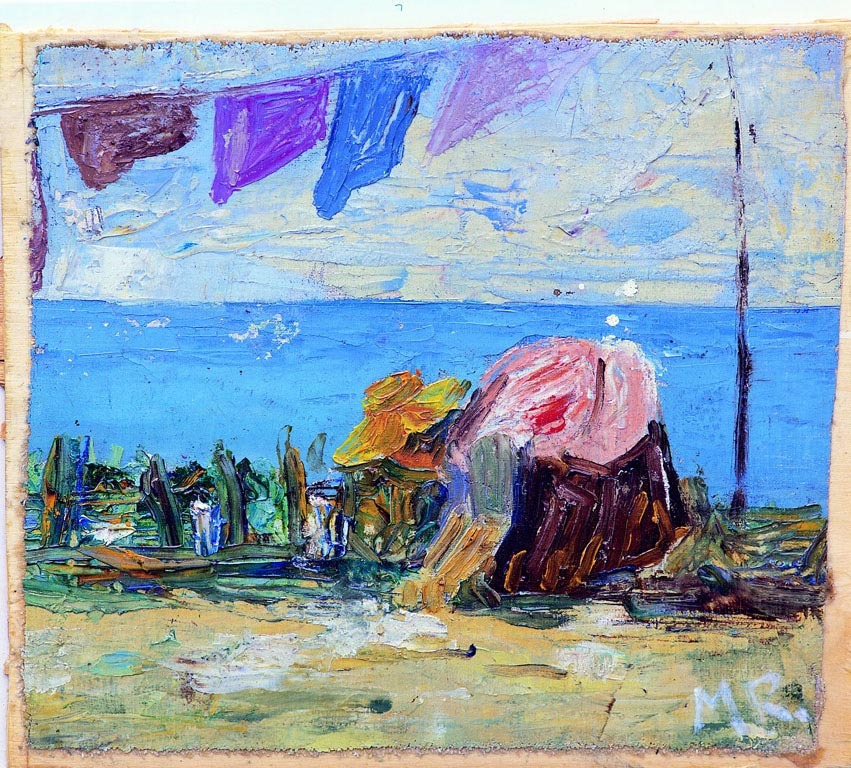
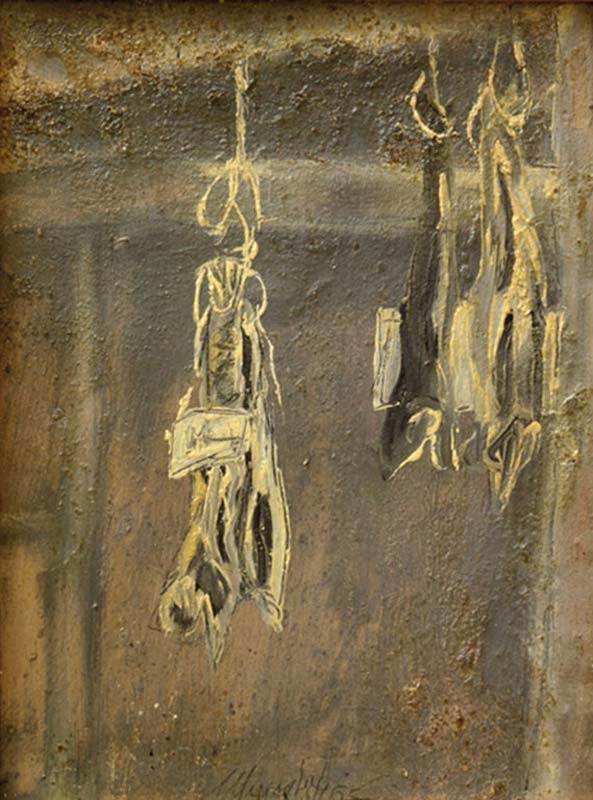
He begins painting as a child under the guidance of Guglielmo, nephew of Bishop Mons. Baggio and his first master. There remain a copy of a «Still Life» by A. Tosi, «The Bishop's House» (1954), the «Washerwoman» portrait (1954) and «I have seen the sea» (1955), oil on the canvas back of a school notebook.
He keeps painting, making his own canvases from torn sheets, stretchers from fruit crates and colors crushed from leaves, bricks and earth thinned in olive oil taken from his mother's grocery: «Still Life with Bottle, Candelabrum and Fruit» (1958), «Uncle Nino's Table» (1959), «Vase of Flowers with Fruit» (1960).
— CH. 04 —
1962
The period of «pittura di getto». To pay for paints, canvases and brushes he tends bar in Rosà. Sent by his parents to Bassano del Grappa he opens a new bar and sets up his first studio in its garage («Whaling in the Northern Seas», «Standing Nude with Red Shoes»). He wins his first prize at the Chioggia open-air contest with «Cattedrale», which falls into salt water — an episode anticipating the future «washed collages» and the x-rays.
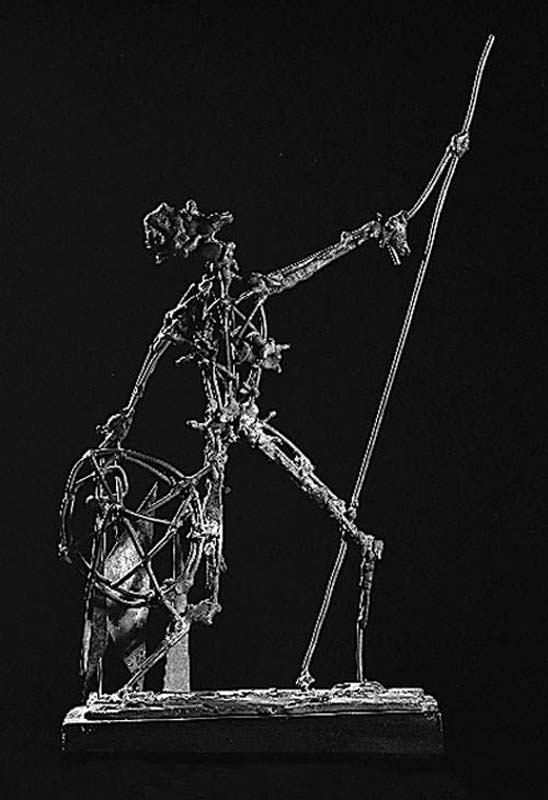
Working as a technical draftsman in a metalworks, he learns to use the oxyacetylene torch and makes the first sculptures from copper and brass wire: «Don Chisciotte 900» and «Il riposo del guerriero». He completes the first collage, «The World in a Suitcase». He graduates as technical draftsman but decides to devote his life to Art.
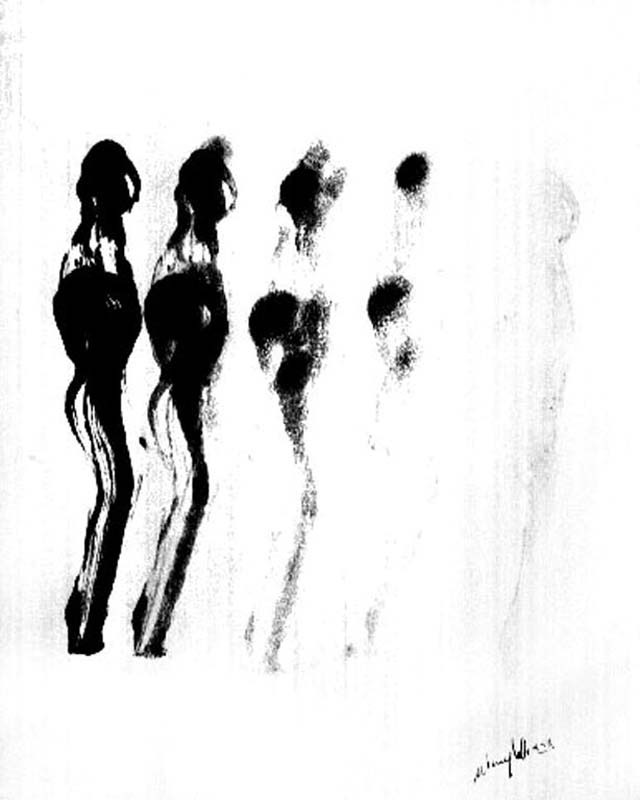
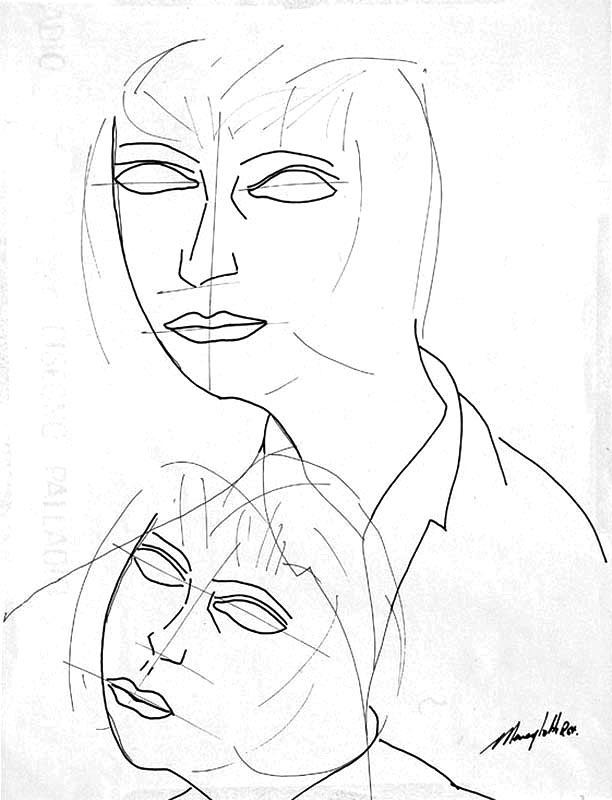
He falls under the spell of black-and-white drawing («Down», «Nel Bosco», «Self-portrait») and begins the Monotypes cycle («Dissolversi», «Il Giudizio», «Quo vadis»): a prelude to the 1979 Radiographs. His first solo show, «Monotipi», opens at the C.A.B. — Circolo Artisti Bassanesi, curated by his former drawing teacher Danilo Andreose. He experiments with grease pencil pressed over oil («Inverno», «In trincea»).
1965
CH. 07
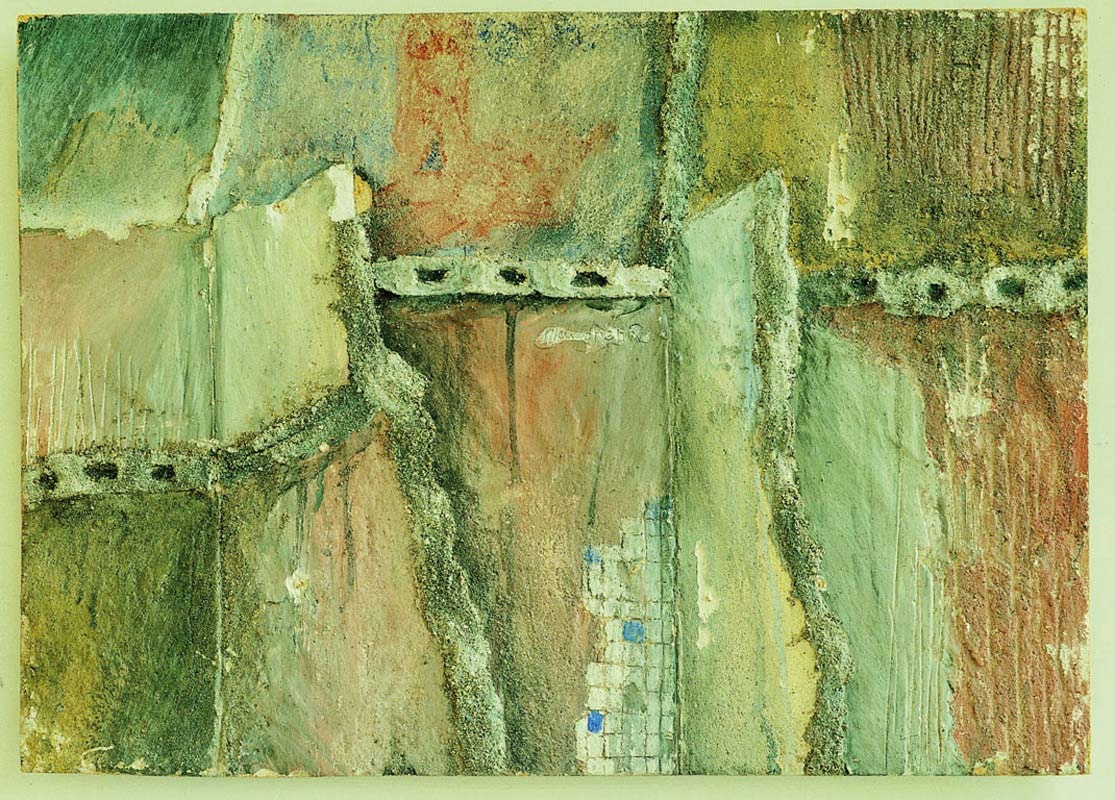
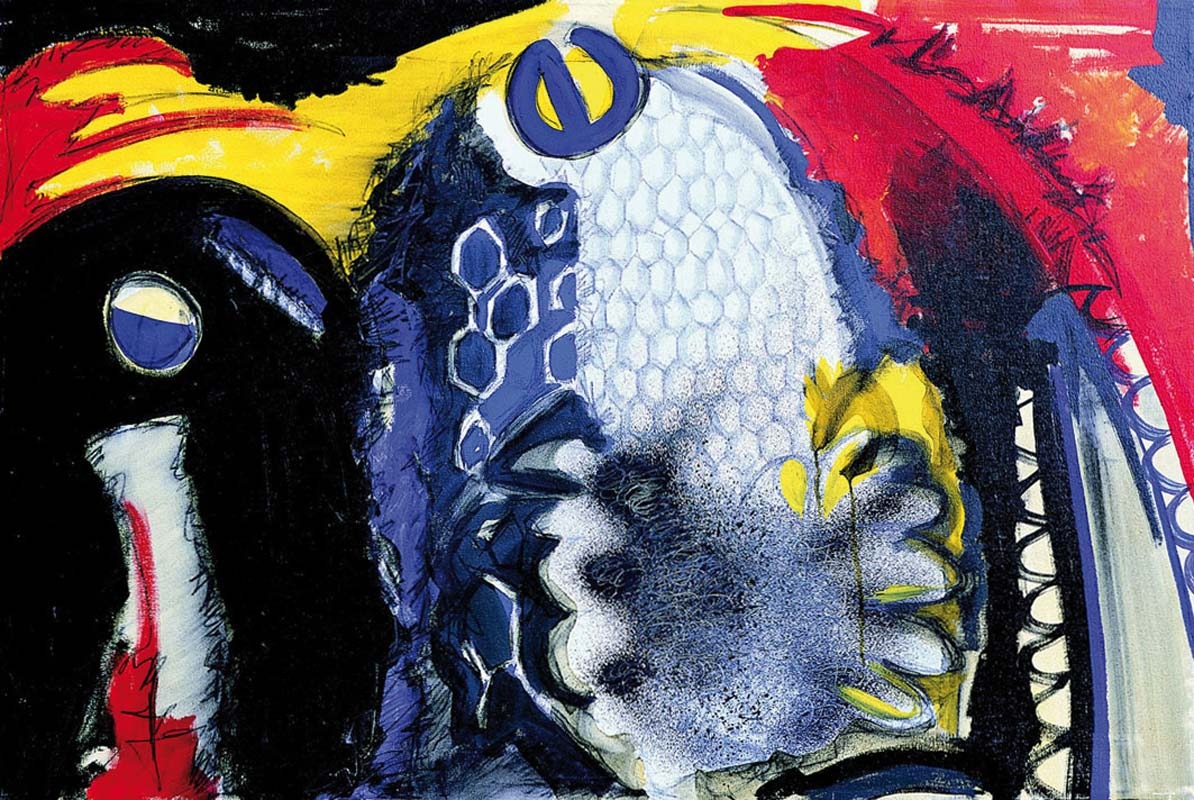
Born are the «washed collages» («Snow fell on Auschwitz», «L.S.D.», «Contestazione in musica»), matter painting («Baccalà») and frescoes on board («Pareti perdute»). In Bassano del Grappa Carlo Munari devotes a show to three friend-artists — Meneghetti, Rino Furlan and Silvestro Lodi — who share a studio under the city's clock tower. He wins the second prize at the «Città di Bassano» painting contest with «Piazza Castello da discesa Margnan».
— CH. 08 —
1967
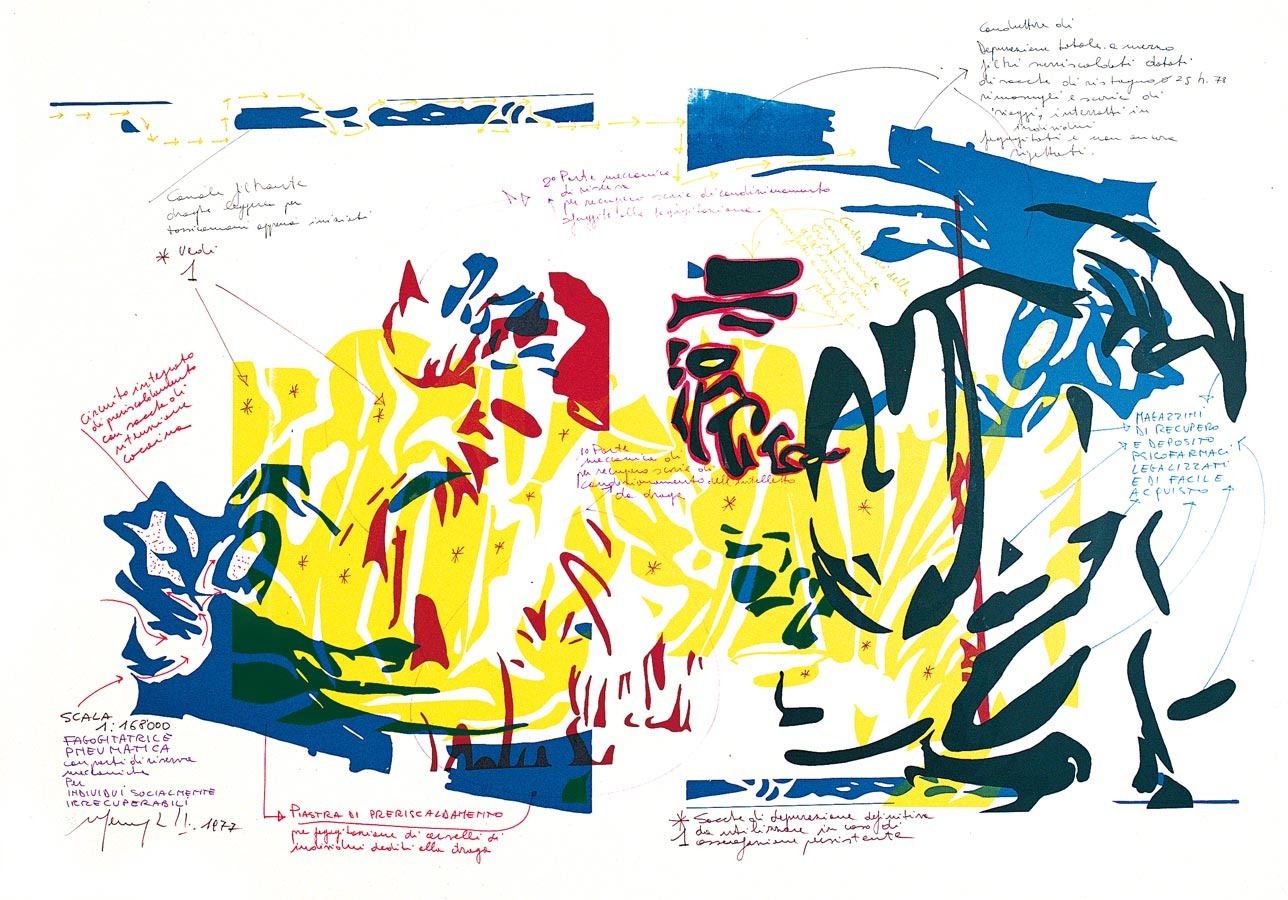
He resumes the Monotypes with mechanical techniques, founding the «Messaggi» series: typed text engraved on the mimeograph plate, then printed by tuning pressure and speed. A new investigation begins, the «Pre-fago», that the following year will become the «Fagocitatrici»: he borrows from medicine the word «phagocytes» and forges the terms «Fagocitatrici, Fagocitati, Fagocitanti» to brand the enslavers and the enslaved.
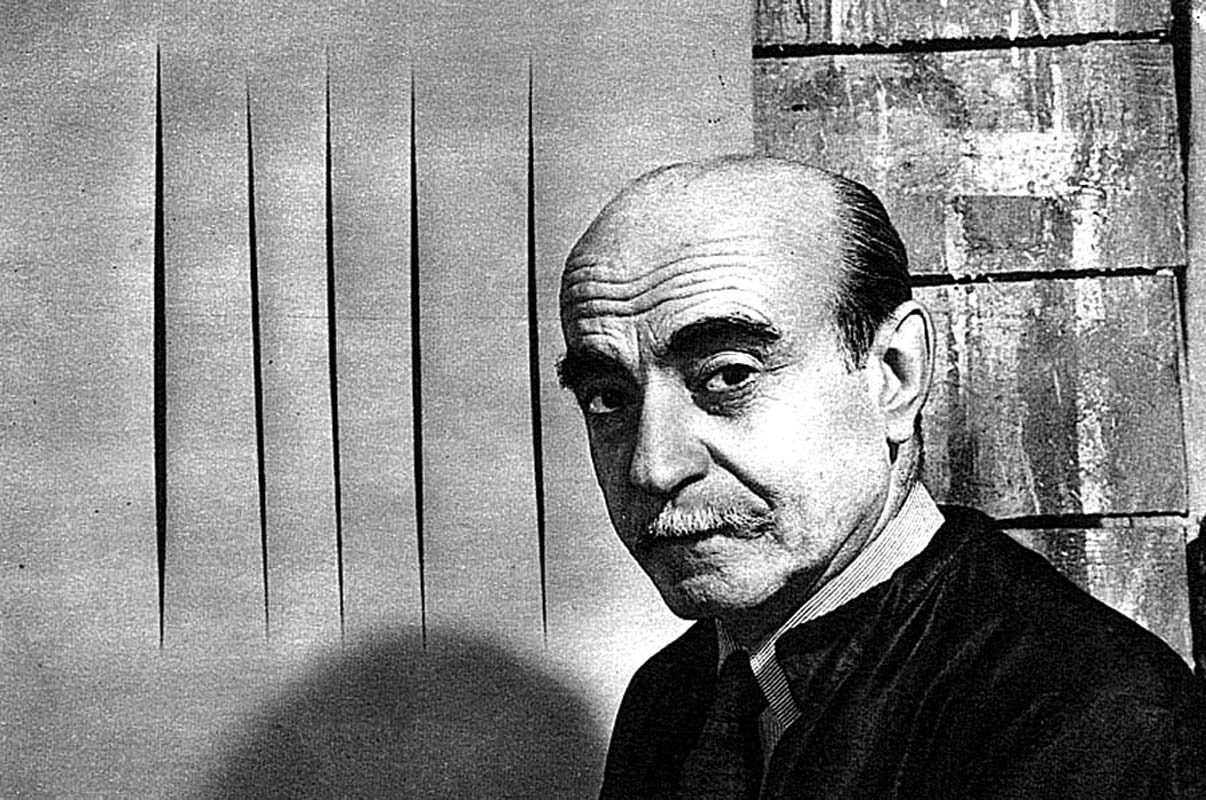
During military service in Pavia he sets up a studio in the barracks and paints over a hundred officers' portraits — plus a few record covers for his army friend Gianni Morandi. There, far from the public squares, he completes the «Fagocitatrici» cycle. Lieutenant Tajana introduces him to Lucio Fontana, who welcomes him into his studio and writes an autograph critical essay for the Ligurian shows beginning in Albissola.
1969
CH. 10
After a bohemian period in Liguria he returns to Bassano del Grappa, marries and to support himself founds Studio MR — the future advertising agency — whose first job is the logo of the Istituto Filippin in Paderno del Grappa. It is the time of the «Macrofago» («Macrofago 121», «Macrofagocitatrice 15», «Macrofagi»). In sculpture he makes the «Alberi tecnologici», large twisted-aluminium-wire forms.
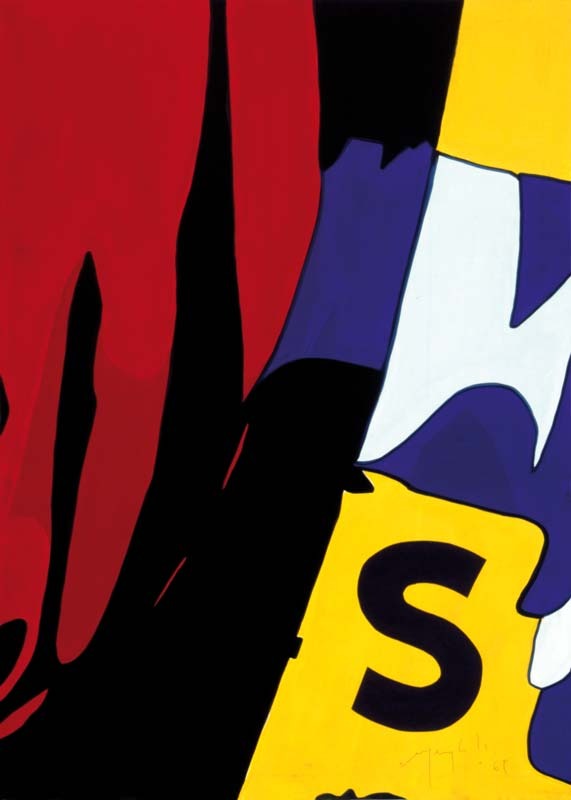
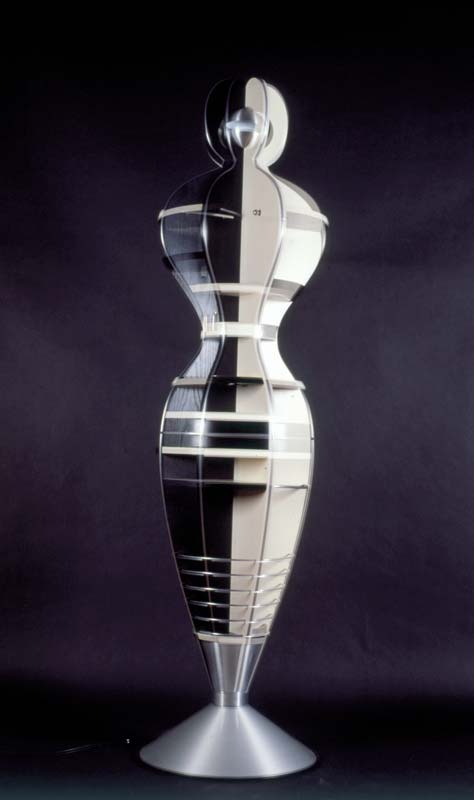
He begins working in theatre, music, cinema, photography, sculpture and design. He founds DDD Design with Tiziano Zen: «Lavagna light» (1973), the lamp-sculpture «L'albero della Vita» (1971), «Coordinato Lucky», blown glass («Zampogna»), furniture («Maitresse», «Cubo — Il tavolo dei giochi») and the «art multiples» on coloured steel plates. He designs collections for major fashion, jewellery and furniture brands.

— CH. 12 —
1972
He designs and builds the «Museo dell'Automobile Luigi Bonfanti» in Romano d'Ezzelino, a structure that in vertical projection evokes the Monza F1 circuit. In protest he opens the «Retrospettive» shows, signing as «MR il fagocitato», and appears in public wearing a white cape printed with the phagocyte symbols — his stage costume for «Divergenze Parallele». He founds the MRP advertising agency.
ACT
II
Design, architecture, BASTA!
1973–75 → 1985
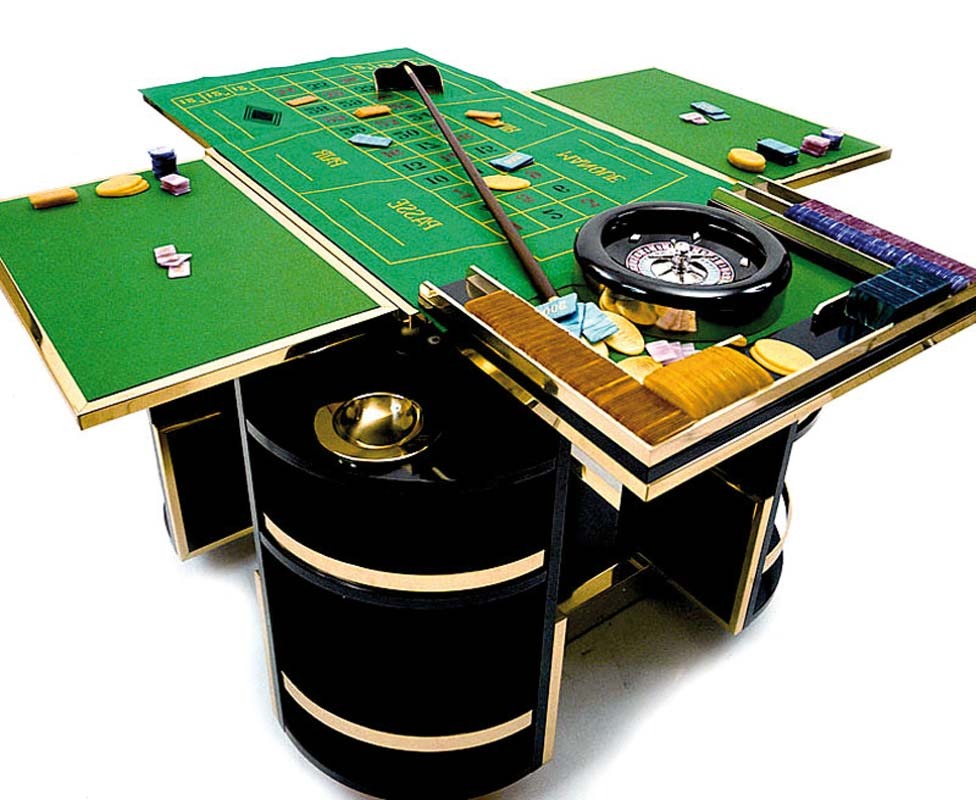
He creates ready-made-like sculptures: «Ostensorio per un Dio tecnologico» (a roll of furniture hinges) and the bronze cast «Cattedrale tecnologica» from two swordfish blades. In 1975 his first daughter, Greta, is born.
— CH. 14 —
1977
He closes his personal revolution by smashing the «Phagocyting Machines» and seeking the «Phagocyting Elements» («Schema di ipotesi 1°», «Spina dorsale di fagocitato», «Fagocitazione di massa»). Rejecting the market, he buys back the works sold in his youth and exhibits only in public spaces and museums. From Count Drigo he acquires the Ezzelino Fortress of Romano (20 hectares): his new studio, with assistants Renato Toffon and Tiziano Torresan.
1979
CH. 15
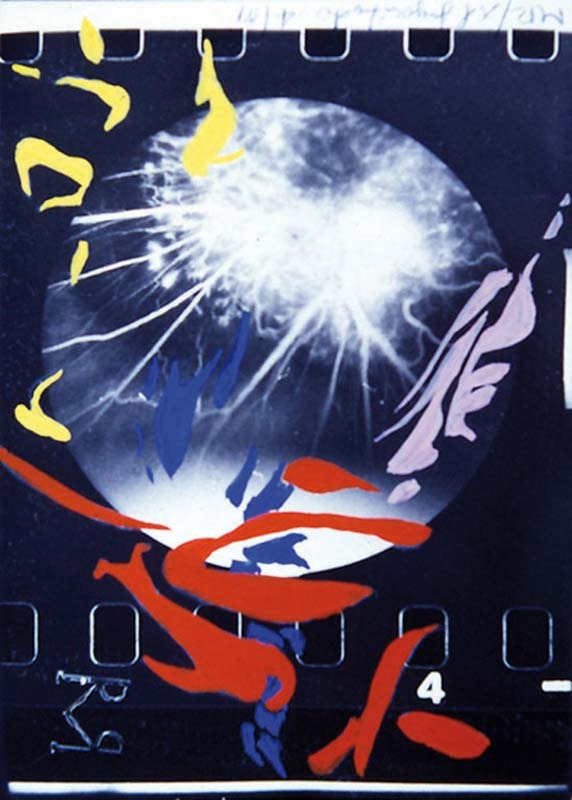
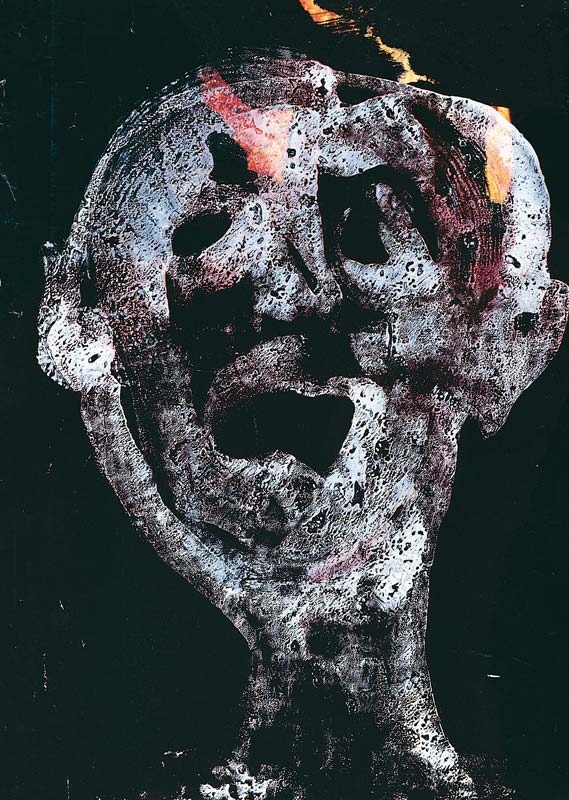
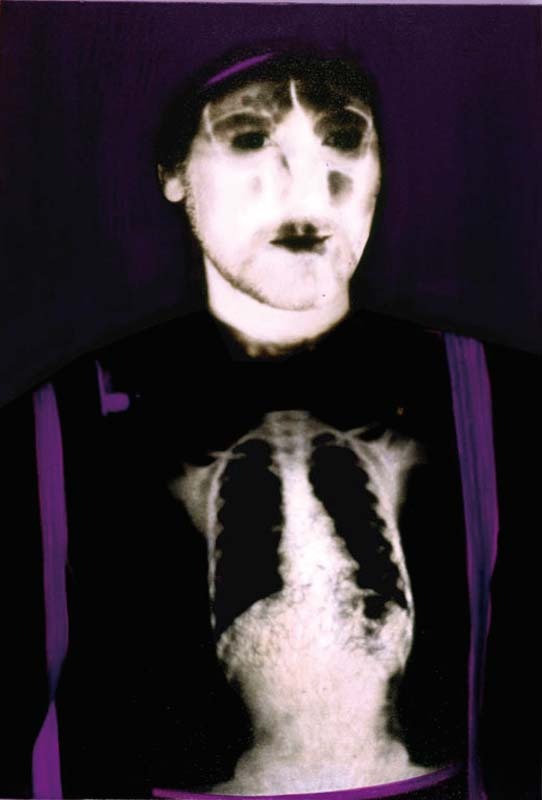
Caught in a family tragedy, he must examine thousands of radiographs; from them rise the first x-ray paintings («Fagocitazione astrale», 1979): emulsified canvases with enlarged anatomies on which he overpaints the phagocyte symbols. His second daughter, Marzia, is born the same year.
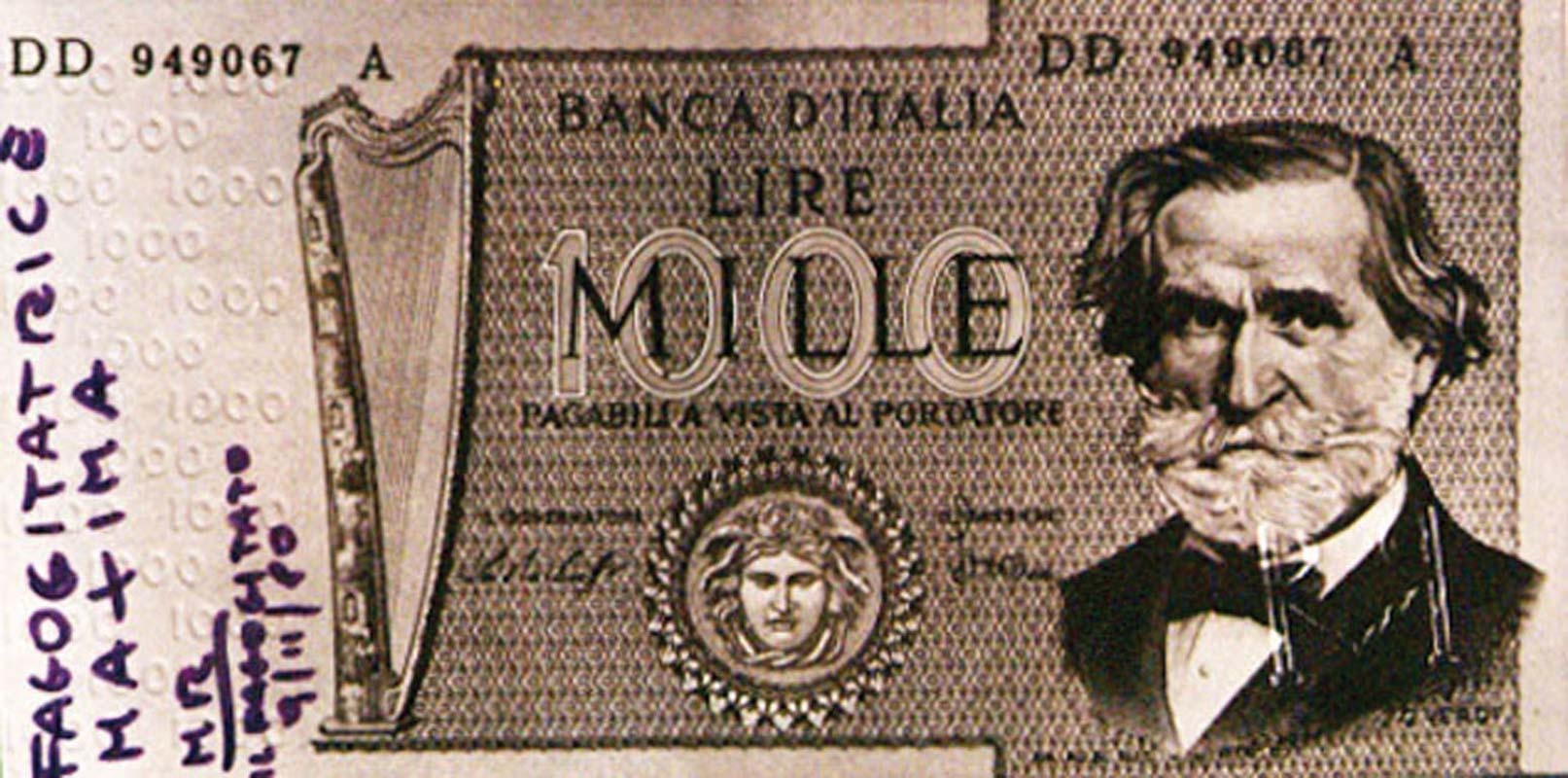
He opens the «Avere o Essere» and «Fagocitatrice Maxima» cycles, distributing signed banknotes in many countries: in 1981 he is arrested in Tunisia and expelled for offence against the State. He closes DDD Design and starts «Insania», composing music at Padua University's CSC on an IBM 370/158. The project takes the form of a photobook, a Panarecord LP and over one thousand photographic self-portraits shot by Claudio Mainardi.
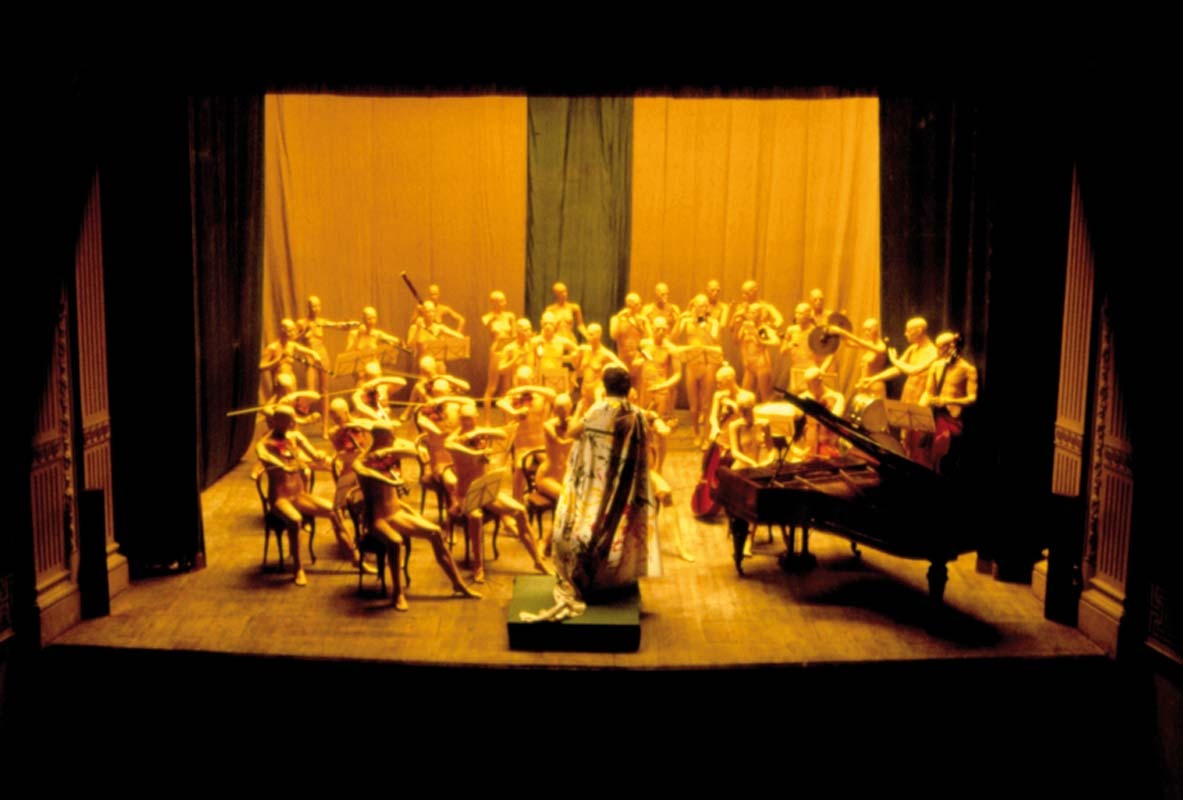
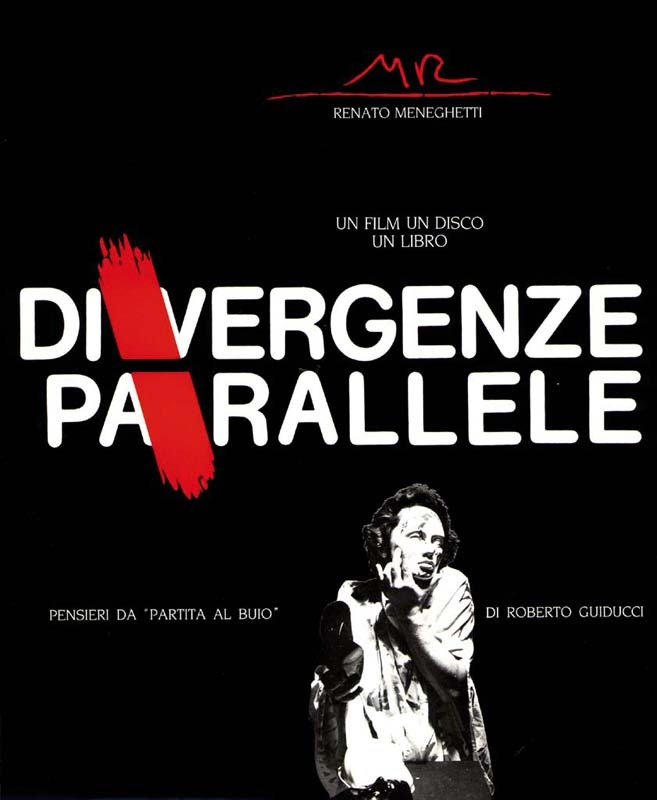
With «Insania» he is invited to the Venice Music Biennale «Numero e suono — International computer music conference». He builds a deep friendship with sociologist Roberto Guiducci, who presents «Insania» on Rai 2's «Terza Pagina» with Raffaele Crovi. Shows at Galleria Pagani al Grattacielo (curators Lanfranco Colombo and Enzo Pagani) and at Galleria Diaframma Canon, Milan. In sculpture he opens the «Carrozzerie Umane» cycle. He shoots the feature «Divergenze Parallele» with Lorenzo Trento on camera and Claudio Mainardi on photography; post-production in Rome at Fonoroma studios with the voice of Manlio De Angelis; classical theme «Questa non è la mia musica» by Stelvio Cipriani.
1983
CH. 18
Gregory J. Markopoulos convinces him to bring the film to the 40th International Film Festival, «De Sica section»: Rai dedicates a special with Lello Bersani interviewing him alongside Bergman and Fellini. Viva Edizioni publishes the photobook «Divergenze Parallele» with texts by Roberto Guiducci and Giancarlo Gastaldo and Markopoulos's essay «Glorioso — the elements and the discipline of violence»; Panarecord releases the soundtrack LP. Best editing prize at the XXII Avellino Neorealist Film Festival «Laceno d'oro». He opens the «Velati-Svelati» cycle at the Civica Galleria of Palazzo Todeschini in Desenzano sul Garda and the «Porno e Antiporno» cycle.
— CH. 19 —
1984
He drops the «MR il fagocitato» pseudonym and signs again in his own name. He resumes collages and décollages with paints and moviola light effects («Così siamo», «Noi al cinema») and the Monotypes in colour («Antico dolore», «Le Baron du Samedì»). He founds Viva Edizioni and MRP Edizioni. Paolo Fabbri invites him with the «Fagocitatrici» to the «Il silenzio, il segreto» symposium at Caffè Pedrocchi in Padua with Bahr, Baudrillard and Jabès.
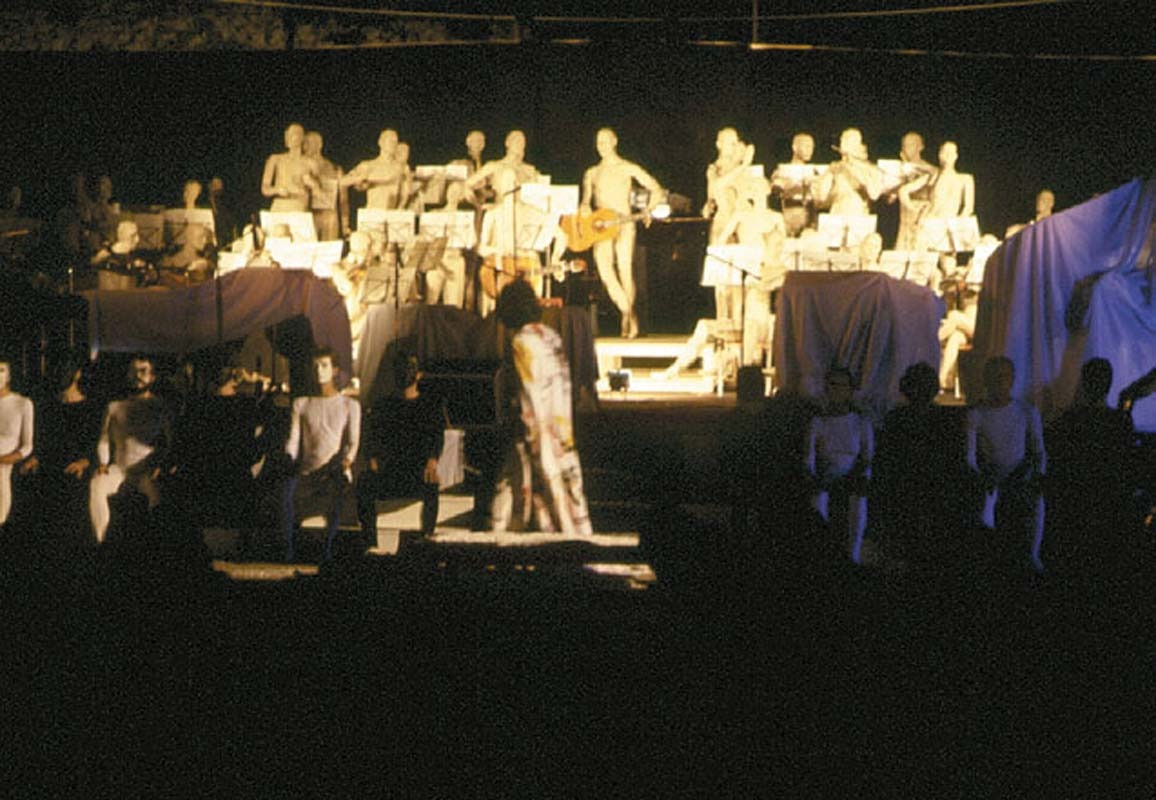
He adapts «Divergenze Parallele» as a «Concertante solo for mime and orchestra» for «Patavanitas» in Padua, at the Arena Romana: 80 metres wide, 60 deep, under the eyes of Giotto. He receives the «Fenice d'oro» for best theatre piece of the year and the theatre prize at the «Gran Premio Rebecca» of Castrovillari. He produces many sculptures in the «Carrozzerie Umane» cycle in thermoformed plastics.
ACT
III
Radiographic plate and Biennales
1987 → 2000
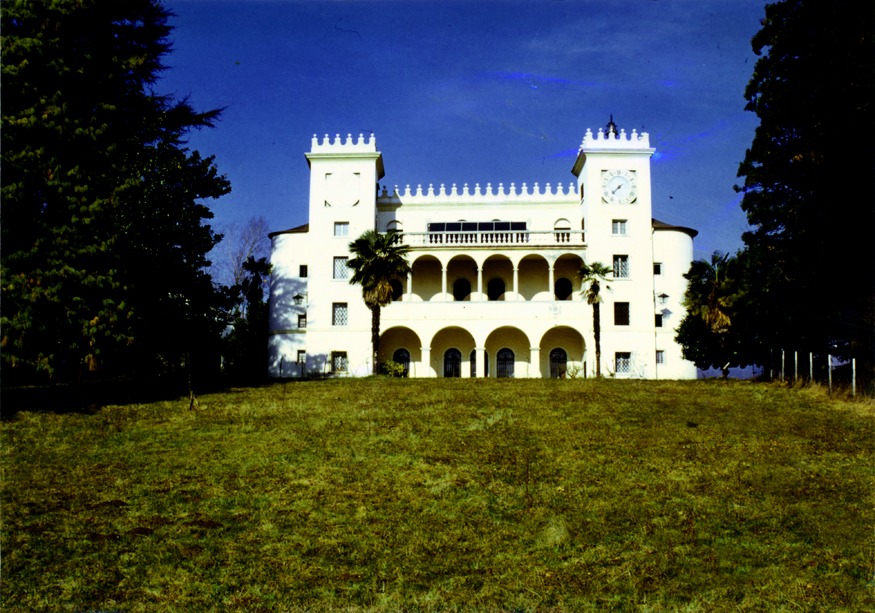
After «Pierrot: fagocitazione in alta società» at the Gran Guardia in Padua («Abitare poeticamente la Terra», curated by Alberto Folin) he suspends exhibitions. He turns to architecture: after the Ezzelino Fortress he buys, restores and inhabits four historic villas and Palazzo Bianchi dal Corno-Michiel-Bonato, from which he has the Jacopo Da Ponte frescoes detached and donated to the Bassano Civic Museum.
— CH. 22 —
1988–93
He cleans the x-ray works of phagocyte symbols: the radiograph becomes the subject, fixed with a varnish that reflects light («Ritratto di Bill nella Death Valley», 1988). The famous «Reds of Meneghetti» take shape. He travels widely without stopping to paint; in 1993 he moves his studio into an industrial building in Romano d'Ezzelino with seven assistants led by architect Paolo De Gasperi. That same year his brother Valerio dies.
1995
CH. 23
He returns to exhibiting with a major solo show alongside «La musica contaminata — XII Traiettori sonore» at the Civica Galleria Villa Olmo in Como, curated by Luca Belcastro. The critic Luciano Caramel notices him and will study and write extensively on his work in the years to come.
Pushed by Paolo Rizzi and Marco Goldin he works without rest. Lacking plates, he submits to constant radiography and x-rays fruit, flowers, animals and everyday objects, laying the ground for the «L'anima del quotidiano in x-ray» cycle. In 1997 he opens «Radiografie 1982-1997» at Palazzo Sarcinelli in Conegliano, curated by Marco Goldin (Marsilio monograph). Gillo Dorfles hails the radiographs as «the only new fact in Italian art in the last twenty years».
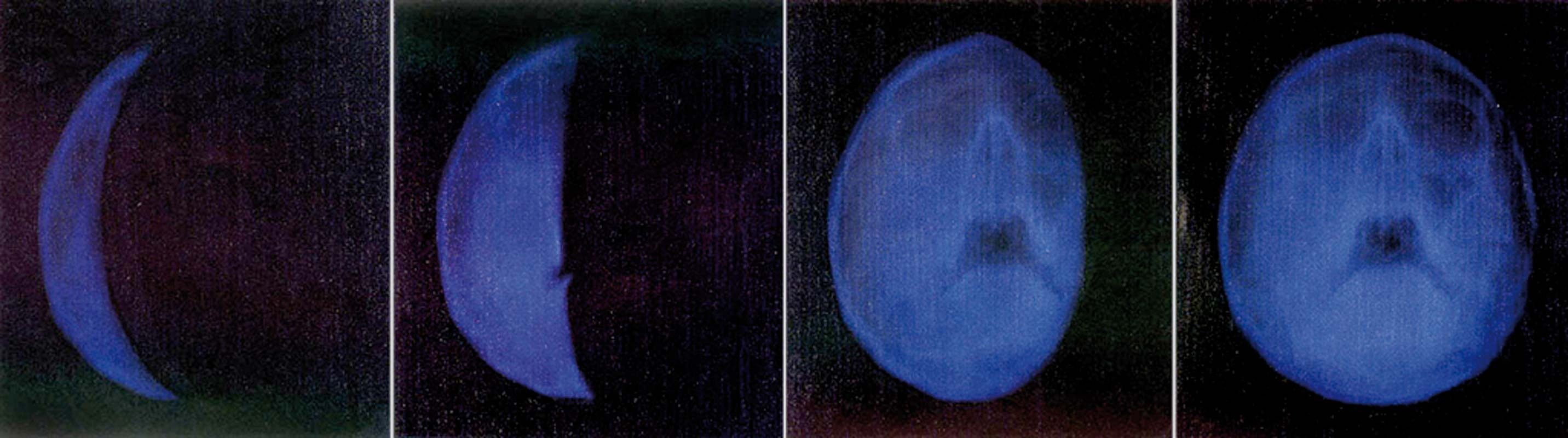
At the II Biennale of Malta he wins 1st prize Painting, 1st Cinema, 2nd Photography, 3rd Architecture, a Design mention and the «Decathlon Art Award» for his career. His works enter the National Museum of Fine Arts, the Cathedral Museum and the Wignacourt Museum of the island, as well as Museion Bolzano, the Bassano Civic Museum, Raccolta Lercaro in Bologna and the Caricature Museum of Tolentino.
1998
CH. 26
For design he shows «Maitresse» (1975) at the Italian Academy in New York with Carmi, Dorazio, Munari and Gio Ponti for «Italian Lifestyle Design». Solo shows at Atelier Z Grand Armée in Paris (C. Peyron), the Foreign Press Association in London (F. Tempra) and the Center of Visual Art, Summit (NJ). He loses his mother. He closes the MRP agency and begins the project / manifesto for «Industria Culturale».
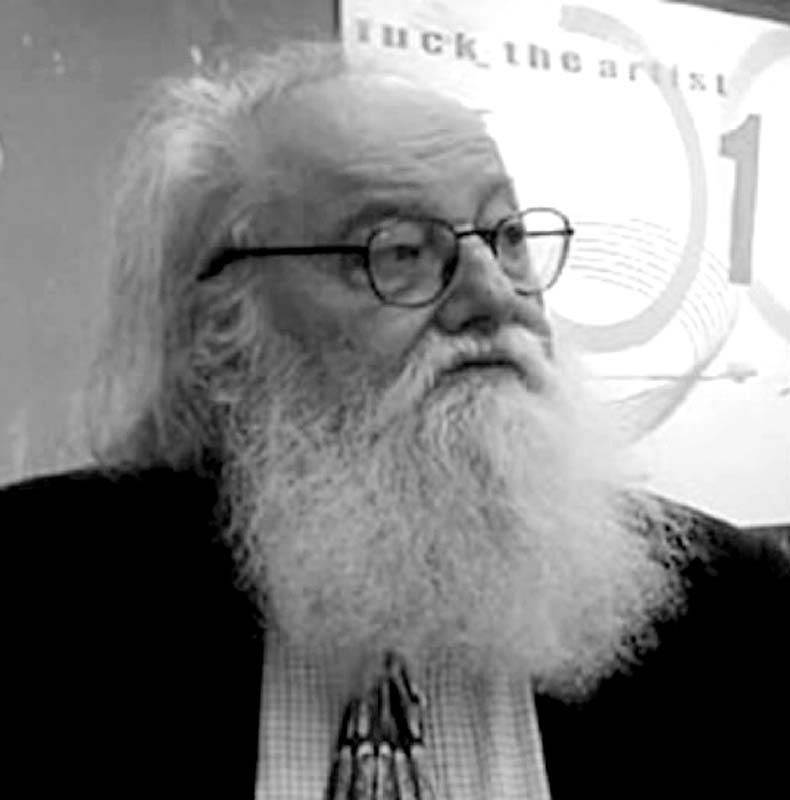
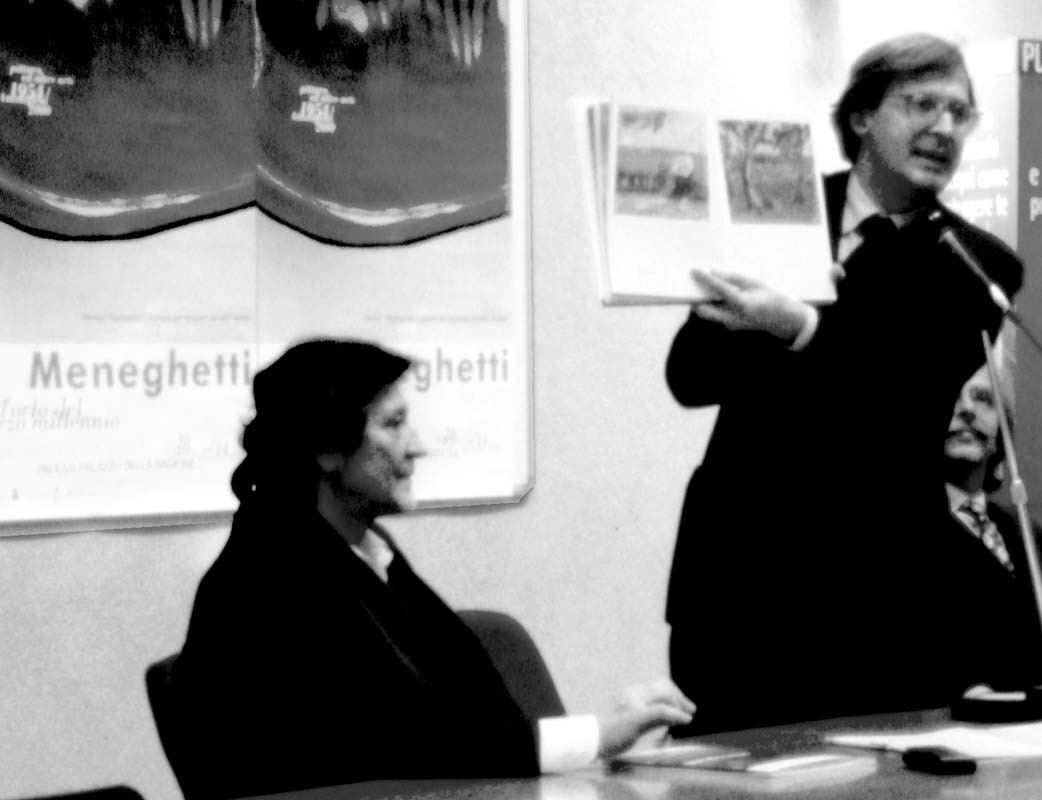
His works enter the evening auctions of 20th-century masters (Christie's, Sotheby's, Bonhams, Dorotheum, Ketterer, Neumeister, Tajan). Vittorio Sgarbi curates the Skira anthological monograph «Meneghetti — Pittura ed altre Arti 1954-1999» with essays by Caramel, Cherubini, Di Capua, Perretta, Pontiggia, Trombadori. Solo shows at the National Museum of Fine Arts in Valletta (curated by Daniel Cutajar) and the Archaeological Museum and Celsus Library in Ephesus (Skira catalogue), with the entire exhibition donated to the children of the Izmit earthquake. He exhibits with Guttuso and Kodra in «Nella rotta di Plinio, Equatorei Celesti» curated by Aldo Gerbino at Isola delle Femmine.
— CH. 28 —
2000
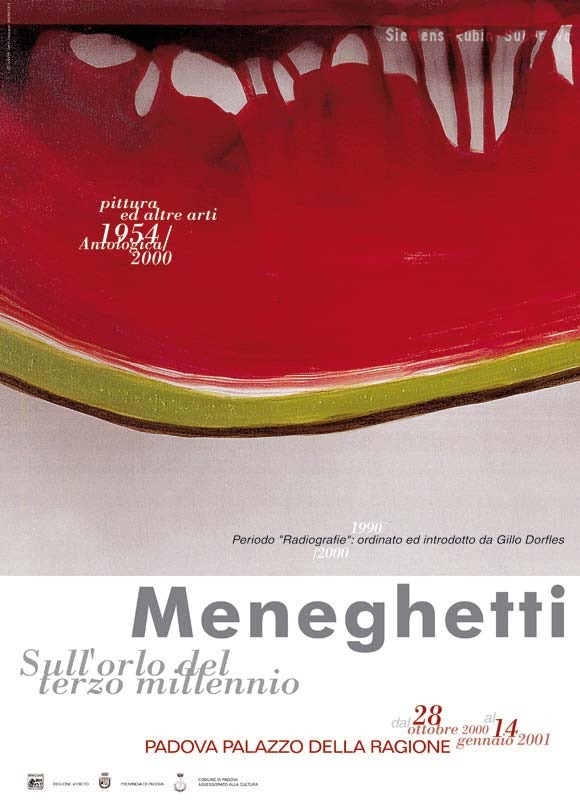
Padua devotes to him at the Palazzo della Ragione and Chiostro Moroni the anthology «Sull'orlo del terzo millennio» (around 300 works): Dorfles curates the x-ray section, Sgarbi the «Pittura e altre Arti 1954-1978» section (Skira and Never catalogues). In Ancona, at the Mole Vanvitelliana, Dorfles and Walter Guadagnini curate «Aldilà dell'occhio: radiografie 1979-2000» (over 350 works, Skira catalogue). New cycles: «Vertebrati Paralleli», «Paralleli Vertebrali», «Daily Golgotha», «Gerusalemme, Gerusalemme!», «Homage to Akira», «Clandestine» and «Indifference». He installs «Secret Structure» on the 120 windows of Palazzo Passuello in Bassano.
ACT
IV
Old Masters, installations, Rome
2001 → 2012–25
— CH. 29 —
2001
At the Centro Culturale San Fedele in Milan Walter Guadagnini and Father Andrea Dall'Asta curate the solo show «Dove abita l'eterno. Radiografie/X Ray» (San Fedele and Viva Edizioni catalogues), followed by a round table with Caramel, Dorfles, Guadagnini and Vettese. The Contemporary Art Museum of Arezzo and the MAGA of Gallarate acquire works.
2002
CH. 30
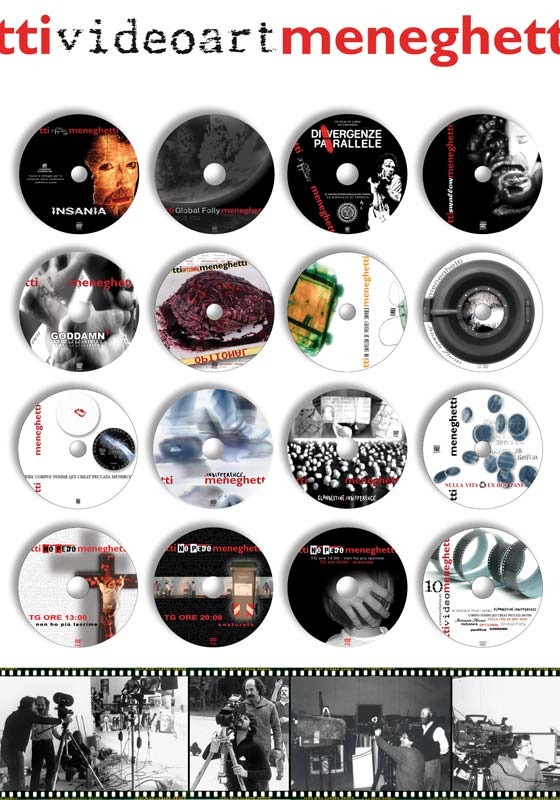
Achille Bonito Oliva introduces «Trasparencies. Bodies and other items x-ray» at the GMB in Bratislava, curated by Ivan Jancar, with texts by Fedor Kriska, Ivan Jancar and Richard Gregor. Pierre Restany presents «Meneghetti x-ray installations 2002» at the PGA in Žilina, curated by Milan Mazur: the first complete showing of «Nulla Vita ex hoc Pane», forty thousand plexiglass coins with embedded x-ray plates. He premieres the videoworks «Corpus Nummi», «Nulla vita ex hoc pane» and «Swallow». His father dies the same year.
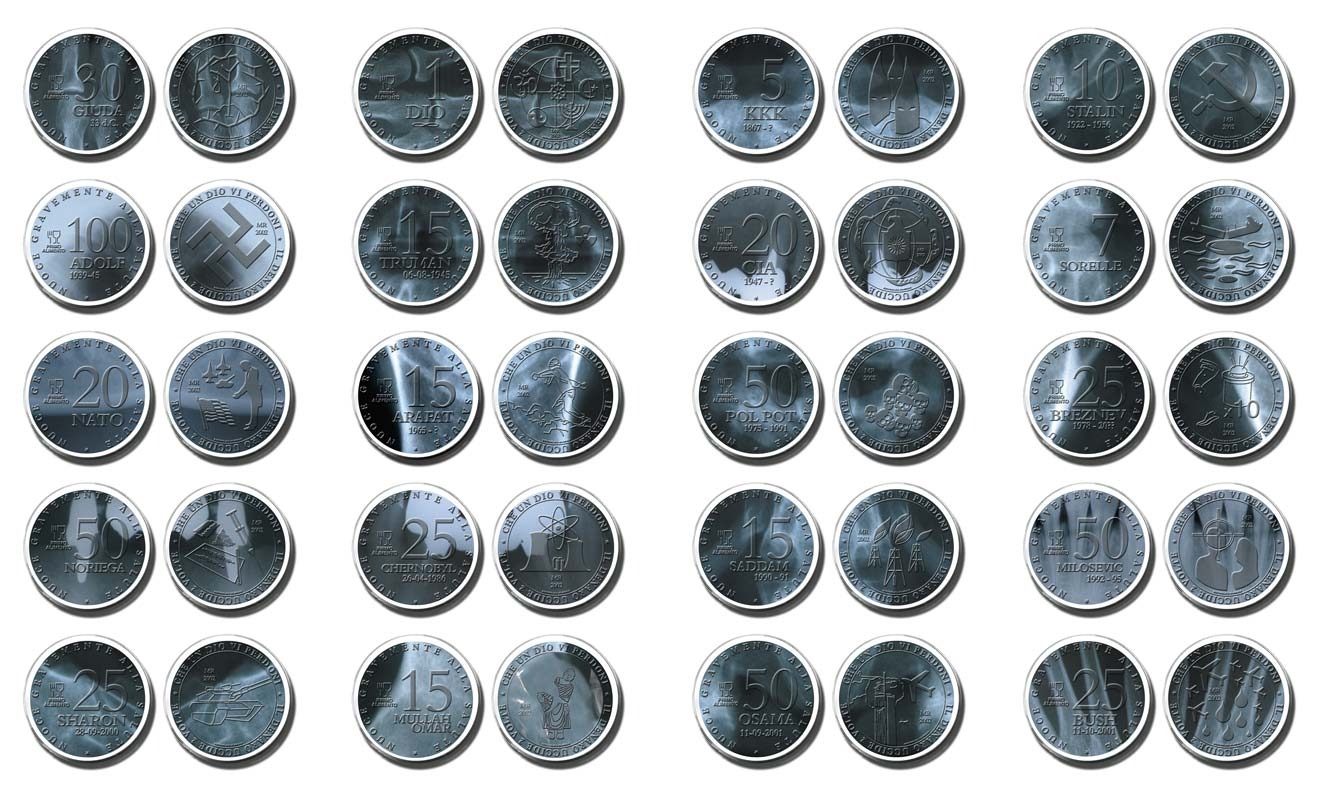
Gillo Dorfles writes him into history with the Skira monograph «Meneghetti. Il corpo come tempo. Il corpo come luogo» (Italian/English), with essays by Manlio Brusatin, Walter Guadagnini, Flaminio Gualdoni, Erich Steingräber, Italo Zannier. He takes part in the 50th International Art Exhibition in Venice, at the Serra dei Giardini, with the video installation «Nulla vita ex hoc pane» in the «Brain Academy Apartment» project by Di Mauro and Morandi. He creates the luminous steel sculpture «Fedele nei secoli» in memory of Marshal Marino di Resta for the Province of Pescara.
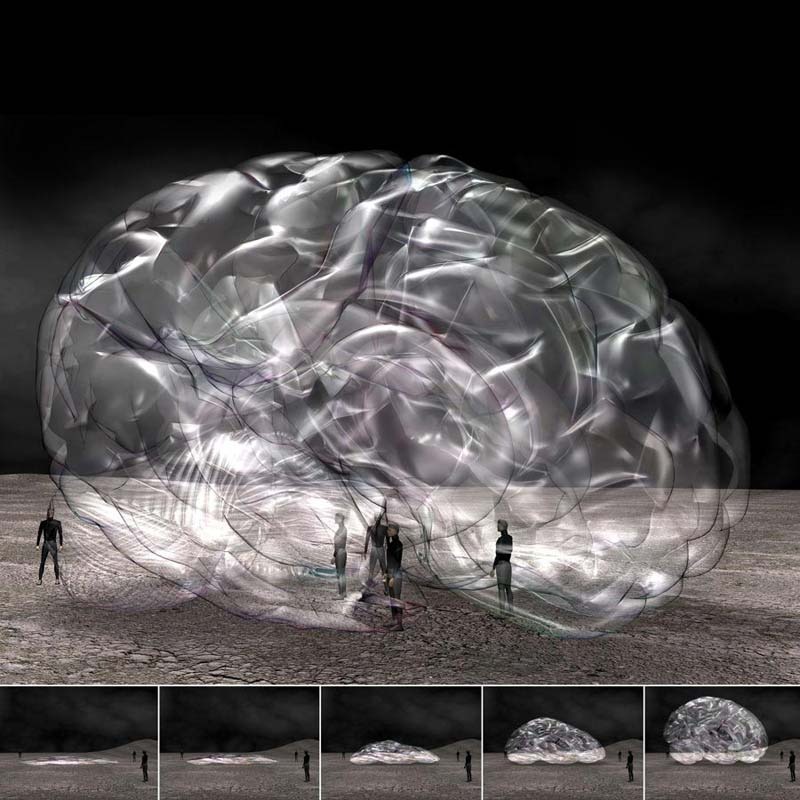
He keeps an intense correspondence with Udo Kultermann and on his suggestion brings «Optional — the inflatable brain» to many Italian squares. David Medalla invites him to the London Biennal. He produces «11 settembre», an aluminium-cast sculpture awarded by the Province of Naples, and the mosaic walls «Anime Giuste» for the Civitavecchia Court of Justice. Vittorio Sgarbi picks «Autoritratto in quaresima — Rx, 1989» for «Da Tiziano a De Chirico: la ricerca dell'identità». Federico Zeri pairs him with Pisanello in a Rai Educational special, «Indagini con Zeri». The sculpture series «Im-possible Anatomies» in resin and optical fibres begins.
— CH. 33 —
2005
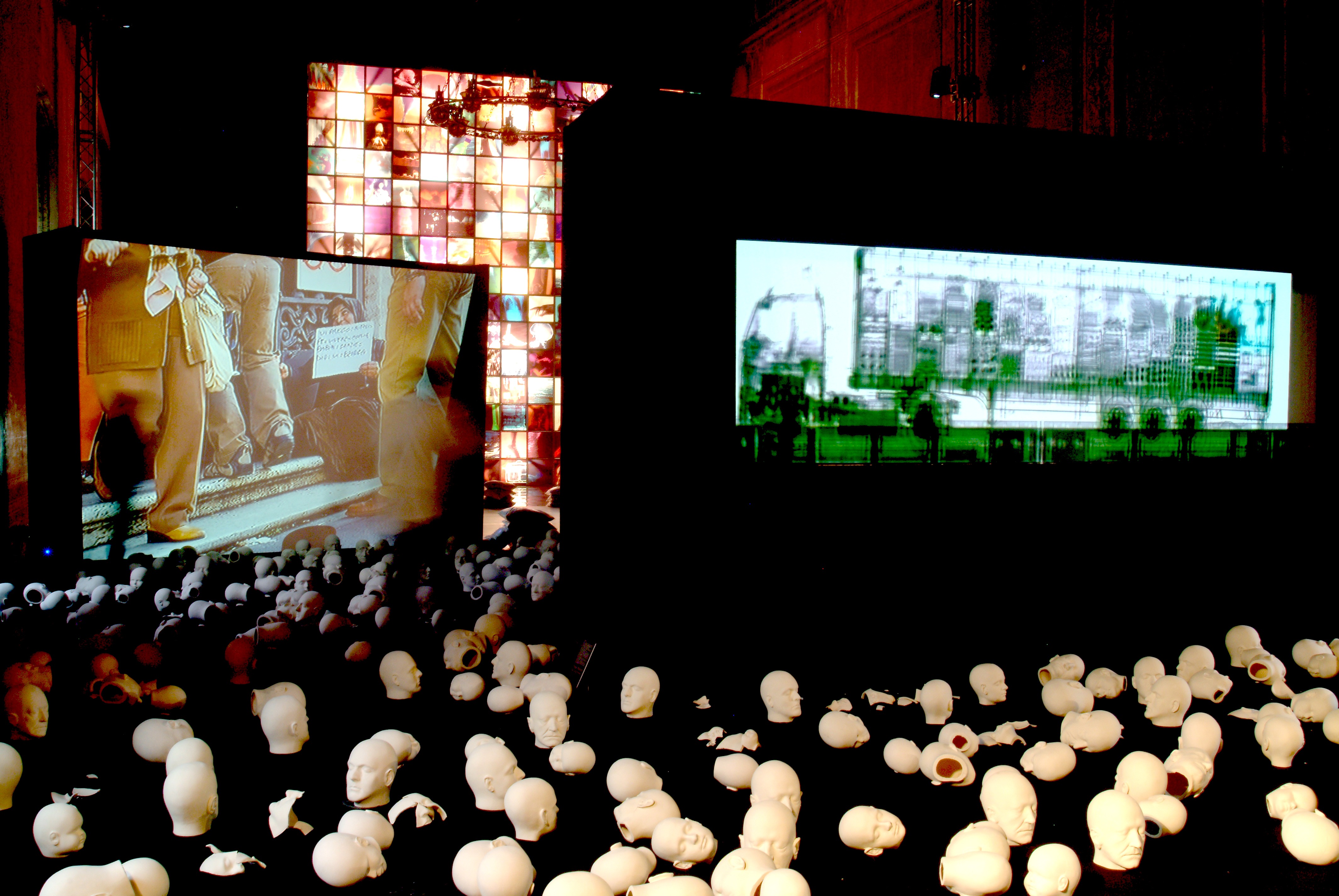
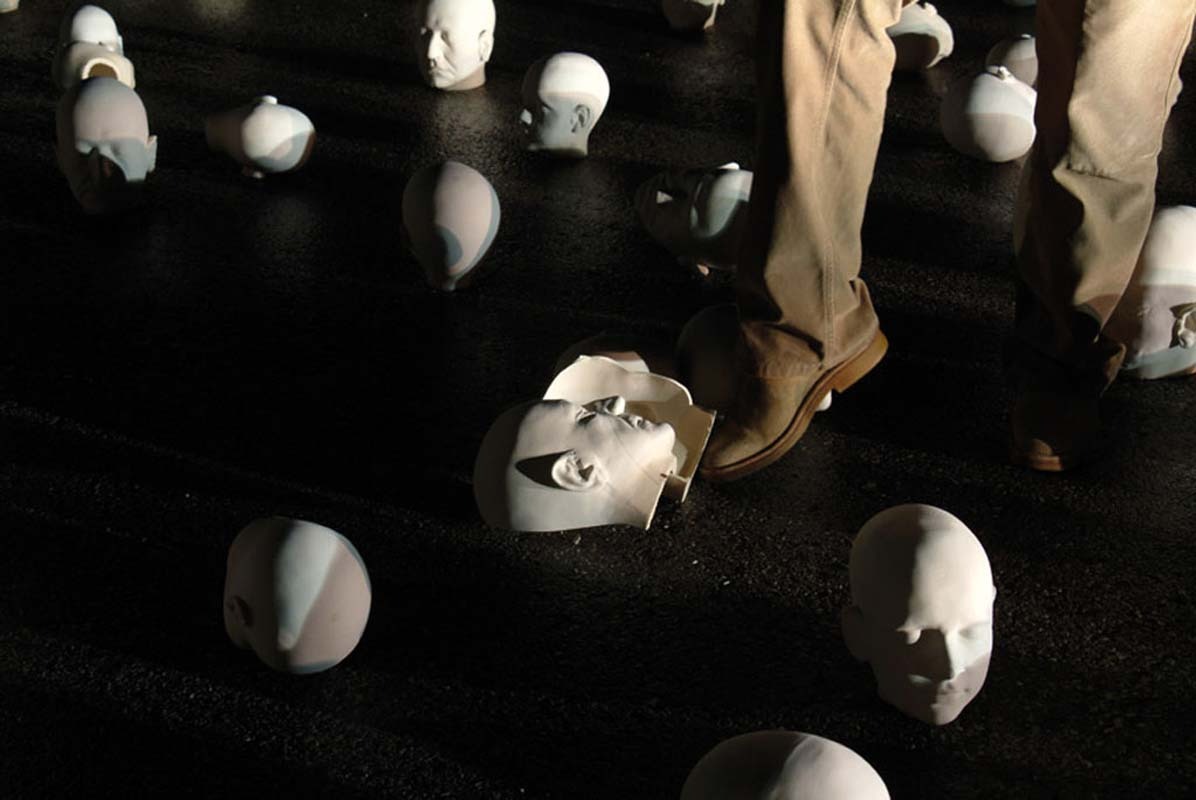
He creates «BASTA!!!», a monumental installation made of over a hundred works from the 80s-90s wrapped like garbage. He develops «Swallow», a thousand coins with a mechanical sculpture, and the «I myself in the Art system» series — fibreglass bodies cast from his own body: «the first sculpture in the history of art modelled from the inside» (A. Bonito Oliva). He resumes «Clandestine» from radiographs of a T.I.R. («Clandestine a Dover»). The «Indifference» installation — thousands of ceramic heads trampled by the public — appears at Macro Testaccio in Rome and at Art Basel. He takes part in «I Mestieri di Ergon» in Latina, curated by Gabriele Perretta. The Ferrari Museum in Maranello acquires «Aldilà dell'occhio: x-ray HP sistema Ferrari».
2006
CH. 34
On the invitation of Superintendent Claudio Strinati and curated by Achille Bonito Oliva, «Meneghetti a Roma — opere 2000-2006» occupies four venues: Museo Nazionale di Palazzo Venezia (with «Minimum Sensation», 324 light boxes), Santo Spirito in Sassia, Sala 1 Scala Santa («Eghenetai»), Archivio Centrale dello Stato. Monograph by Mondadori Electa with essays by Alberto Abruzzese, Don Giuseppe Billi, Paolo Fabbri, Laurence A. Rickels, Claudio Strinati and an interview by Tommaso Trini. Curated by Paolo Fabbri, «Optional» is shown at Castello Sforzesco in Milan in the courtyard of the Rocchetta.
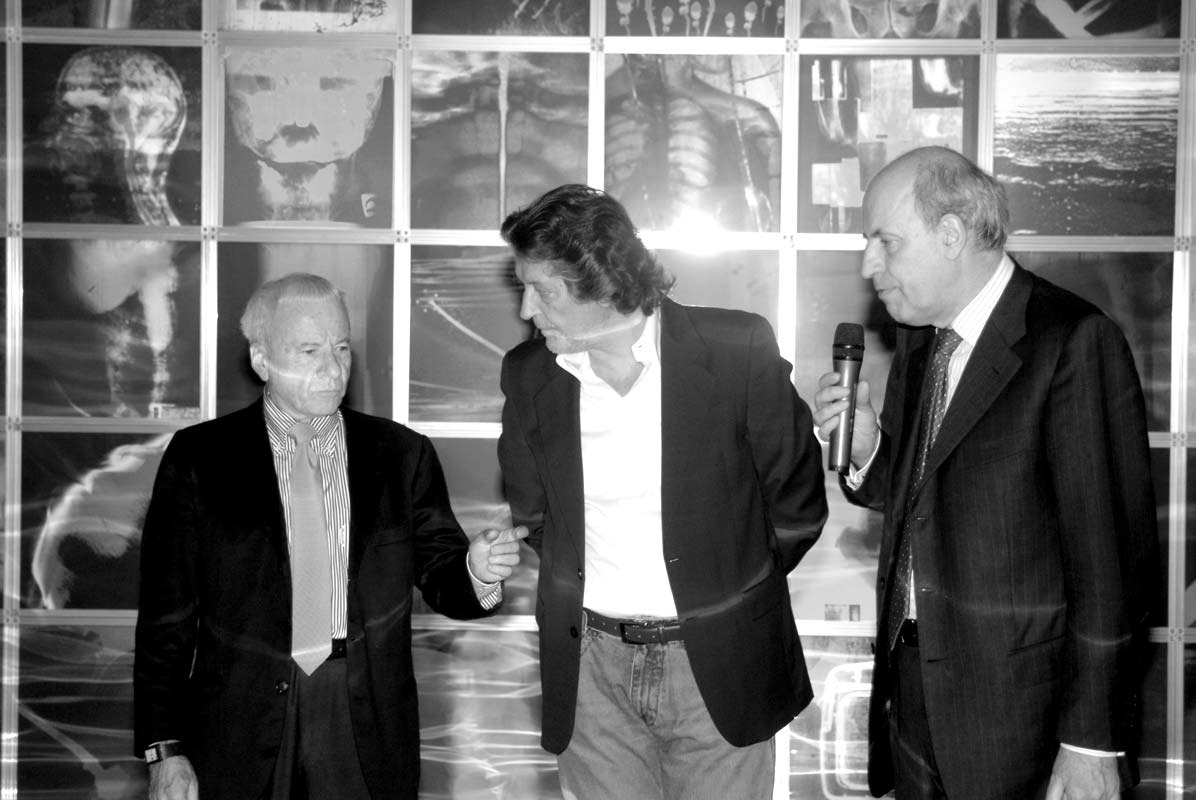
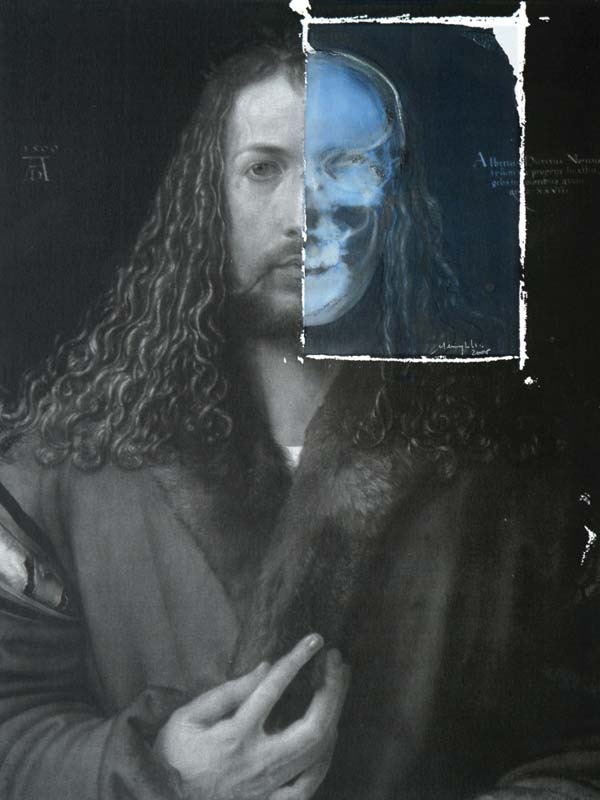
In 2007 he receives the Order of Merit of the Italian Republic. He opens the «I Fiori del Male» and «Il Frutto Proibito» cycles and digitally restores «Divergenze Parallele», issuing a 73' DVD. In 2008 the «Grandi Maestri in x-ray» cycle is born; the Musei Eremitani in Padua acquire the sculpture «La grande madre»; the Central State Archive in Rome acquires «All'ombra di Bonifacio». His path is featured in volume 2 of Giorgio Di Genova's «Storia dell'arte italiana del 900 — Generazione anni 40» (Bora). In 2009 the «Tele Giornali» cycle is born with «Non ho più lacrime» and «Snaturata», and the «Cinema d'artista: Jan Fabre — Meneghetti» event is held at Fronte del Porto, Padua.
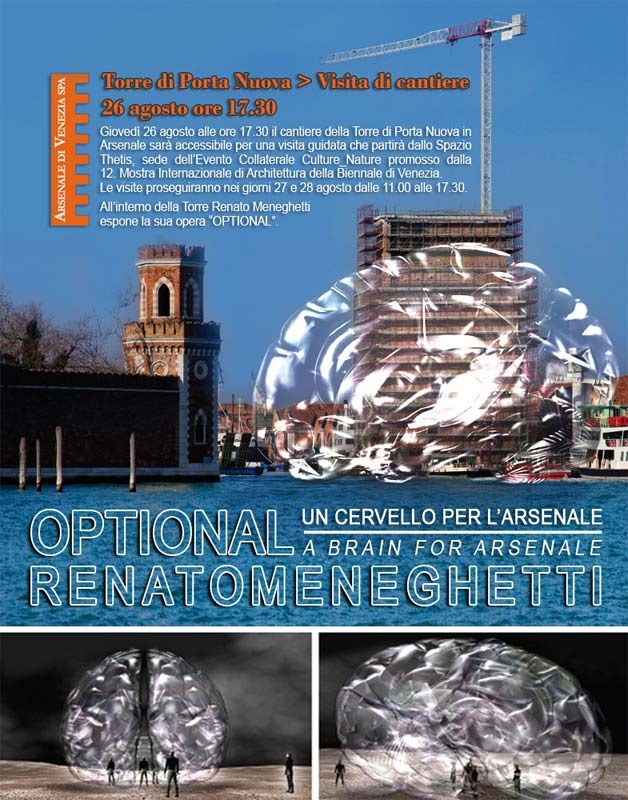
At the 12th International Architecture Exhibition in Venice («Culture Nature», curated by Fortunato D'Amico) he shows «Indifference» at the Torre di Porta Nuova and inflates «Optional» as architecture; at Spazio Thetis he installs «Dachau 7 a.m.» and «Mutante», acquired permanently alongside works by Jan Fabre and Beverly Pepper. He shows at the MIC of Faenza on Jadranka Bentini's invitation the installations «Paralleli Vertebrali» and «Vertebrati Paralleli», and holds the solo show «Inside» at Spazio Gianni Testoni in Bologna curated by Alberto Mattia Martini. He moves his studio to Cassola and founds «Industria Culturale» and the Archivio Studio Renato Meneghetti, cataloguing some 2,500 works.
— CH. 37 —
2011
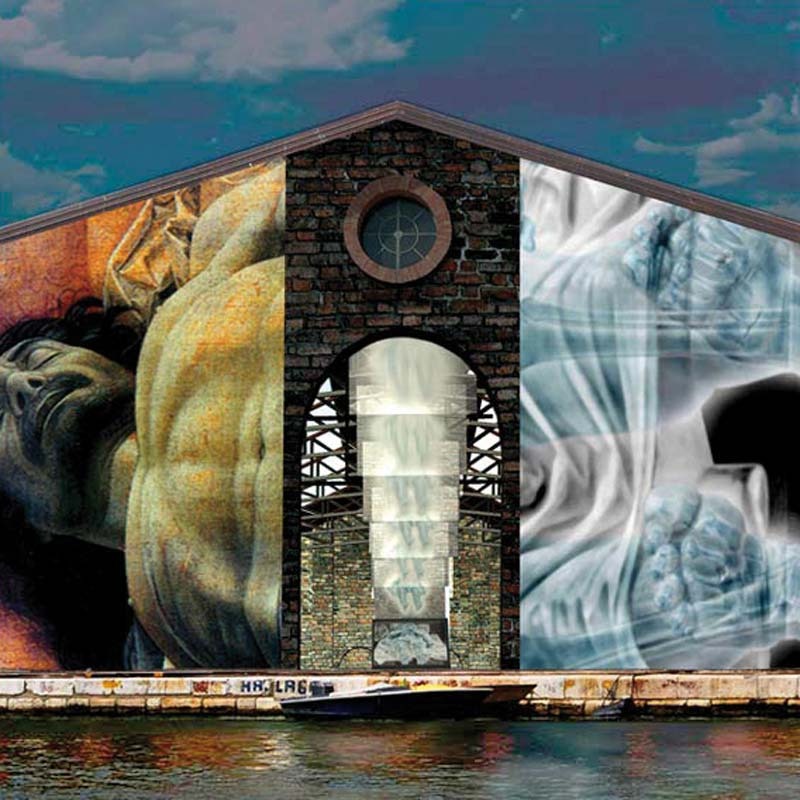
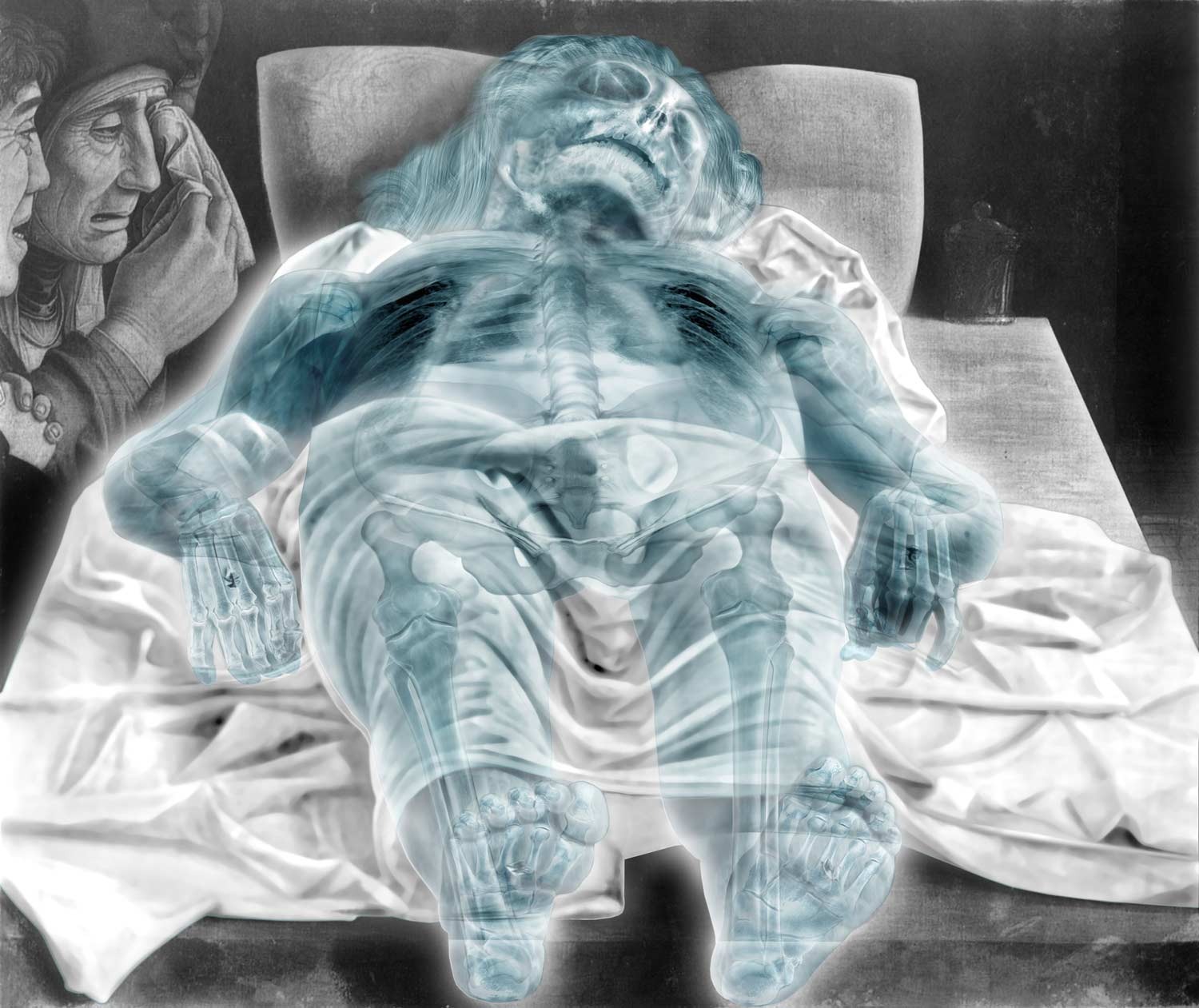
On Andrea Zanzotto's recommendation, Vittorio Sgarbi invites him to the 54th International Art Exhibition in three sections: Italian Pavilion with «Il Cristo morto del Mantegna in x-ray»; Tesa 99 with the monumental installation «Sottopelle — Il Cristo morto del Mantegna in x-ray», which Ennio Pouchard calls «the masterpiece not only of his, but of this Biennale» (soundtrack «Magnificat» by Mina, direction Alberto Bartalini); Tese 101-102 with «La bugia — anche gli elefanti hanno il naso lungo» (Skira catalogue curated by Sgarbi). Bassano del Grappa devotes «Aldilà dell'occhio — opere 2000-2011» (curated by Beppe Sebaste and Giuliana Ericani, introduced by Claudio Strinati, Silvana Editoriale) in three museum venues. For Andrea Bocelli's «Teatro del Silenzio» at Lajatico he creates the set with «Optional» and «Eghenetai».
2012–25
CH. 38
On the invitation of the Vicariate of Rome and the Pontifical Council for Culture, Francesco Buranelli curates «Guardare dentro per Vedere oltre — il Cristo morto del Mantegna» in Santa Maria in Monte Santo, Rome (LGE catalogue, Apostolic Blessing by Pope Benedict XVI), followed by «40 opere dal ciclo Grandi Maestri» at Galleria Benucci, «About Caravaggio» at the Castello Aldobrandini in Frascati (2013) and the touring «I have come to you again — Blessed John Paul II». In 2013, for Pope Francis's visit to Assisi, Buranelli curates «Da Simbolo a Segno — Il Cristo morto del Mantegna in x-ray» at the Palazzo e Torre Capitano del Popolo (direction Alberto Bartalini); Meneghetti also takes part in «Il miracolo del pane e del vino» (curated by Laura Villani) with the design for a transparent chalice dedicated to the Pope. Also in 2013, the Museo di Palazzo Pretorio in Peccioli hosts the solo show «Daily Golgotha» (Vol. 1 of «Crossing Art», curated by Buranelli, direction Bartalini), and Ennio Pouchard curates «Optional — opere 1997-2013» at Galleria Castellano in Castelfranco Veneto. «Divergenze Parallele» enters the Archive of the Italian National Film Library in Rome. In 2014 he joins the touring group show «Marilyn Monroe — I just want to be wonderful» (curated by Paolo Pancaldi) with «Rx 2 Marilyn, 2014», and the City of Merano invites him to «Weihnachts Baume-collection» (curated by Laura Villani) with the installations «Minimum Christmas Sensation» and «Christmas Indifference». In 2016 the Metropolitan Museum of Art of New York acquires for the Thomas J. Watson Library the videoart (28 DVDs), monographs and catalogues; he also takes part, at the invitation of the Typewriter Museum of Parcines, in «Machina Scriptoria» (Pancaldi). In 2017 he is guest of honour at the IV Ferrara Arts Festival «Dare voce al silenzio» (curated by Francesca Mariotti, Palazzo della Scroffa) and opens the «Beyond appearance, the real» cycle. In 2018 Willy Montini curates «Sofferenza e indifferenza. L'arte dell'arte» at Galleria Orler in Punta Ala; he joins «Humain» at Saint-Jean-Cap-Ferrat (curated by Gianluca Gaudio); begins working with Contini Contemporary of London and Cortina (Arte Fiera Bologna, Arte Padova, Art Verona, Scope Art Show Basel); and is invited to «The Popes of the Councils of the Modern Era» at the Capitoline Museums in Rome. In 2019 he presents the «Cristo morto del Mantegna in x-ray» at «Dif.fusione88» (Spazio Olimpia, Bassano, curated by Pietro Gasparotto), takes part in «Machina Scriptoria» and «Typewriter» at Contemporary Art Pancaldi in Rome, and Cris Contini Contemporary devotes the solo show «Underskin» to him in London for the 500th anniversary of Leonardo's death. In 2020 he takes part in BAF — Bergamo Arte Fiera; Atlas Edizioni publishes the school manual «Scoprire l'Arte» (curated by Dorfles, Dalla Costa, Ragazzi), which includes «Grandi Maestri: Michelangelo, Creation of Adam» as study material; Glasgow University's «Subcity Radio» obtains broadcasting rights for the concerts «Insania, 1981» and «Divergenze Parallele, 1983». In 2021 Mimesis Edizioni publishes «Paolo Fabbri — Vedere ad Arte» (edited by Tiziana Migliore) with the essay «La Trans-visione del mondo» dedicated to Meneghetti; he joins the «La iglesia de los angeles» project in Argentina (Fondazione Museo del Parco of Portofino, curated by Ennio Michele Brass). In 2022 a large installation of the «Dead Christ of Mantegna» at the Cittadella Socio Sanitaria of Rovigo Hospital, with 50 works from the «Grandi Maestri in x-ray» cycle; the ULSS 5 Polesana acquires «Michelangelo, Creation of Adam» for the new angiography ward. In 2023 he shows «Optional — caution, it might inflate» at the Andria International Festival «Castel dei Mondi» and at Castel del Monte (under the patronage of the EU, MIBAC, UNESCO); his works enter the State collections: «Quirinale contemporaneo» (Paralleli Vertebrali), Italian Embassy to the Holy See («Kiss to Camilla»), Veneto Region for the ULSS 7 Pedemontana — Bassano Hospital («Renato, Marzia e Nadia con Aorta»). In 2024 he shows in «Trasparente — a show at the edge of the visible» at Spazio Artenetwork Orler in Rialto (curated by Willy Montini) and in «Battute d'Arte» at Spazio Heart in Vimercate (curated by Pancaldi); he produces twelve works for the sets of the Italian-Bulgarian film «Aurora» by Stoev and Boshnakov. In 2025 he joins «Ricordi Sbiaditi» at Villa Sesso Schiavo, Sandrigo (curated by Ugo Bianco) with the video installation «Clandestine»; the University of Padua adopts «Leonardo, Monna Lisa (Detail), 2010» as the symbol image for its «Focus — on MSK Upper Limb» course; he is invited to the MISFF Montecatini International Short Film Festival (Bio&Arts section, curated by Laura Villani) with the video «Entità Morfologiche — Il mondo di Renato»; and he shows «Oniria, 1982» at «RossoOro», Spazio Isola SET in Milan (curated by Willy Montini), alongside Fontana, Pomodoro, Munari and Pistoletto.
The work continues in the studio in San Zeno di Cassola.
Go to the works →